
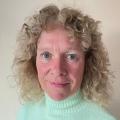


AN innovative treatment using ketamine for post-traumatic stress disorder (PTSD) is being tried out in Ukraine thanks to funds raised in Scotland.
Much of the money has been raised by Rotary Clubs supporting the charity Intertwined, set up by Scotland-based Ukrainian Svitlana Iniakoviene.
She had been living “a very happy” life in Scotland for 13 years when the Russians invaded her former homeland and her brother, a civilian, joined the Ukrainian army, leaving behind his craft beer business and young family.
Living in peaceful Scotland, Iniakoviene was overwhelmed with fear and despair and threw herself into helping him and his fellow soldiers survive.
Help came from Scots and Ukrainians living in Scotland, including Fife provost and former Dunfermline Athletic football manager Jim Leishman.
An initial fundraising event brought together Scottish and Ukrainian craft makers, artists and musicians, and raised enough money to buy a Land Rover Snatch, which was sent to Ukraine.
Iniakoviene thought that might be the end of it, but it was only the beginning as she was invited to host more events and Intertwined was born – a group of artists, musicians, chefs and volunteers dedicated to cultural sharing and direct aid for Ukrainian soldiers.

The organisation's events celebrated Scottish and Ukrainian culture, while giving support to people in Ukraine.
“Performing across different parts of Scotland, Intertwined showcased the richness and vitality of our shared cultural heritage,” said Iniakoviene, a mum of three and craft worker.
“Everywhere we went, people met us with enthusiasm. Audiences were touched by the music and stories. After each event, they kept asking us for more.
“Through these moments, Intertwined showed what Ukrainians are fighting to protect and what cultural treasures they keep safe, even in the hardest times.”
The funds raised were initially used for safety equipment for those fighting on the front line, but after a couple of years, a new problem emerged as it became apparent that being under constant bombardment was causing severe mental health problems for those trying to defend Ukraine.
“The victims of this situation are our defenders, our soldiers – many of whom were ordinary civilians before the war and who took up arms when the enemy invaded because they simply couldn't do otherwise,” said Iniakoviene.
“Now, they are struggling to cope with the traumatic experiences, the horrors they've witnessed and participated in. Their children, wives, and parents are suffering as well. It is nearly impossible to battle such a burden alone. These people urgently need help. The scale of this crisis is immense.”
She became aware of the growing mental health crisis in Ukrainian society in 2024, when she returned to the country to help her ailing parents.
Over the seven months she lived there, she spoke with Ukrainian soldiers and saw how much her brother had changed after three years on the frontline. Her father had also become depressed, struggling with the constant anxiety of waiting for his son to come home.
Desperate to help, she found Expio Medical Centre in Kyiv, a clinic that offers innovative psychotherapy methods. Her father received several ketamine-assisted therapy sessions there, which helped him significantly.

Iniakoviene later learned that the centre's specialists use psychedelic-assisted therapy as a primary method for the psychotherapeutic rehabilitation of soldiers. She hopes that her brother and his friends will be able to receive such treatment after the war as well.
“Often, people with these kinds of problems do not recognise they need help,” she said. “They do not ask for it. Even when their mental health is severely affected and they urgently need medical assistance, they continue to serve in the army and fight on the frontline.”
Having experienced a family tragedy and found herself unable to help her brother, Iniakoviene has turned her attention to helping others. She is now raising funds to provide treatment for people suffering from war-related PTSD, both in Ukraine and in Scotland, and has registered Intertwined as a charity.
One of its main goals is to run a major research project on ketamine-assisted therapy for PTSD in Ukraine and Scotland, and the University of Groningen in the Netherlands has agreed to analyse the data.
“Unfortunately, Ukraine is one of the few places where large-scale data can be collected quickly and ethically, so we'll use this situation to help create an effective treatment protocol for complex PTSD,” said Iniakoviene.
“There is no such global protocol at the moment because there is simply not enough data. This is a good opportunity for us to help people suffering from PTSD all around the world.”

During the study, it is planned to treat approximately 50 Ukrainian veterans at Expio Medical Centre in Kyiv and around 10 Scottish veterans at the Eulas Clinic in Hamilton, South Lanarkshire.
Intertwined is raising £230,000 for this worldwide research project, but the charity's immediate, life-saving priority right now is to help large numbers of people in Ukraine.
“We will also treat some veterans here in Scotland, but not in such large numbers, as treatment here is so expensive,” Iniakoviene said.
In Ukraine, a group of seven people can receive three ketamine-assisted therapy sessions combined with counselling for around £5,000.
Money has already been raised, much of it through Rotary Clubs in Scotland, but more is required as the need is so great.
One group of men has already been treated with promising results.
Speaking about the first group, Iniakoviene said: “At the beginning, many struggled with anxiety, sleep problems, guilt, isolation, alcohol use, but by the third ketamine session, clear collective healing was visible.
“Clinicians have assessed the results as very positive and that has inspired us to continue this activity, to continue this fundraising and to find more groups.”
Funding has already been raised to support a second group of seven in Ukraine.
Iniakoviene acknowledges that the use of ketamine may be seen as controversial but insists that if used safely it is not addictive and looks as though it could be used positively to help people with PTSD.
“It's a way to heal this specific trauma, and we have to use it,” she said. “These people served to defend us, and we are responsible for their health.
“The more people that receive treatment, the more effective it will be for the data gathering, and it will be easier for clinicians to promote it.”
Restarting vital research
MILITARY personnel suffer from mental health disorders in high numbers. In the UK alone, research by King’s College London has revealed that Post-Traumatic Stress Disorder (PTSD) and Common Mental Disorders (CMD) have increased among UK veterans.
In Ukraine, both civilians and military personnel are affected. More than 80% of those surveyed are experiencing war-related moderate to high stress, and more than 30% are experiencing severe PTSD, which can have devastating consequences.
However, conventional treatments for PTSD often fail, and resistance to treatments has led scientists to investigate other forms of medicines.
Research on psychedelics as a mental health treatment started in the 1950s but stopped with the “war on drugs” in the 1970s. Over the past decade, research has been restarted on psychedelics’ potential for helping people with PTSD, and there are now around 100 psychedelic-based treatments in various phases of clinical trial.
While it works slightly differently, ketamine is often included under the term “psychedelic-based” and is on the WHO list of essential medicines.
It was first licensed as an anaesthetic in the UK in 1970. Its derived form, esketamine, has been used for severe depression since 2019. While not fully known, its mode of action seems to be linked to the creation of new connections in the brain.
Yet even though research provides support for the antidepressant and anti-suicidal effects of ketamine, those effects are often short-lived.
However, if ketamine is used with psychotherapy, the positive effects appear durable.
A recent trial found that a significant decrease in depression, anxiety and suicidal ideation was fully maintained after eight weeks.


Share